Interview multiple candidates
Lorem ipsum dolor sit amet, consectetur adipiscing elit proin mi pellentesque lorem turpis feugiat non sed sed sed aliquam lectus sodales gravida turpis maassa odio faucibus accumsan turpis nulla tellus purus ut cursus lorem in pellentesque risus turpis eget quam eu nunc sed diam.
Search for the right experience
Lorem ipsum dolor sit amet, consectetur adipiscing elit proin mi pellentesque lorem turpis feugiat non sed sed sed aliquam lectus sodales gravida turpis maassa odio.
- Lorem ipsum dolor sit amet, consectetur adipiscing elit.
- Porttitor nibh est vulputate vitae sem vitae.
- Netus vestibulum dignissim scelerisque vitae.
- Amet tellus nisl risus lorem vulputate velit eget.
Ask for past work examples & results
Lorem ipsum dolor sit amet, consectetur adipiscing elit consectetur in proin mattis enim posuere maecenas non magna mauris, feugiat montes, porttitor eget nulla id id.
- Lorem ipsum dolor sit amet, consectetur adipiscing elit.
- Netus vestibulum dignissim scelerisque vitae.
- Porttitor nibh est vulputate vitae sem vitae.
- Amet tellus nisl risus lorem vulputate velit eget.
Vet candidates & ask for past references before hiring
Lorem ipsum dolor sit amet, consectetur adipiscing elit ut suspendisse convallis enim tincidunt nunc condimentum facilisi accumsan tempor donec dolor malesuada vestibulum in sed sed morbi accumsan tristique turpis vivamus non velit euismod.
“Lorem ipsum dolor sit amet, consectetur adipiscing elit nunc gravida purus urna, ipsum eu morbi in enim”
Once you hire them, give them access for all tools & resources for success
Lorem ipsum dolor sit amet, consectetur adipiscing elit ut suspendisse convallis enim tincidunt nunc condimentum facilisi accumsan tempor donec dolor malesuada vestibulum in sed sed morbi accumsan tristique turpis vivamus non velit euismod.
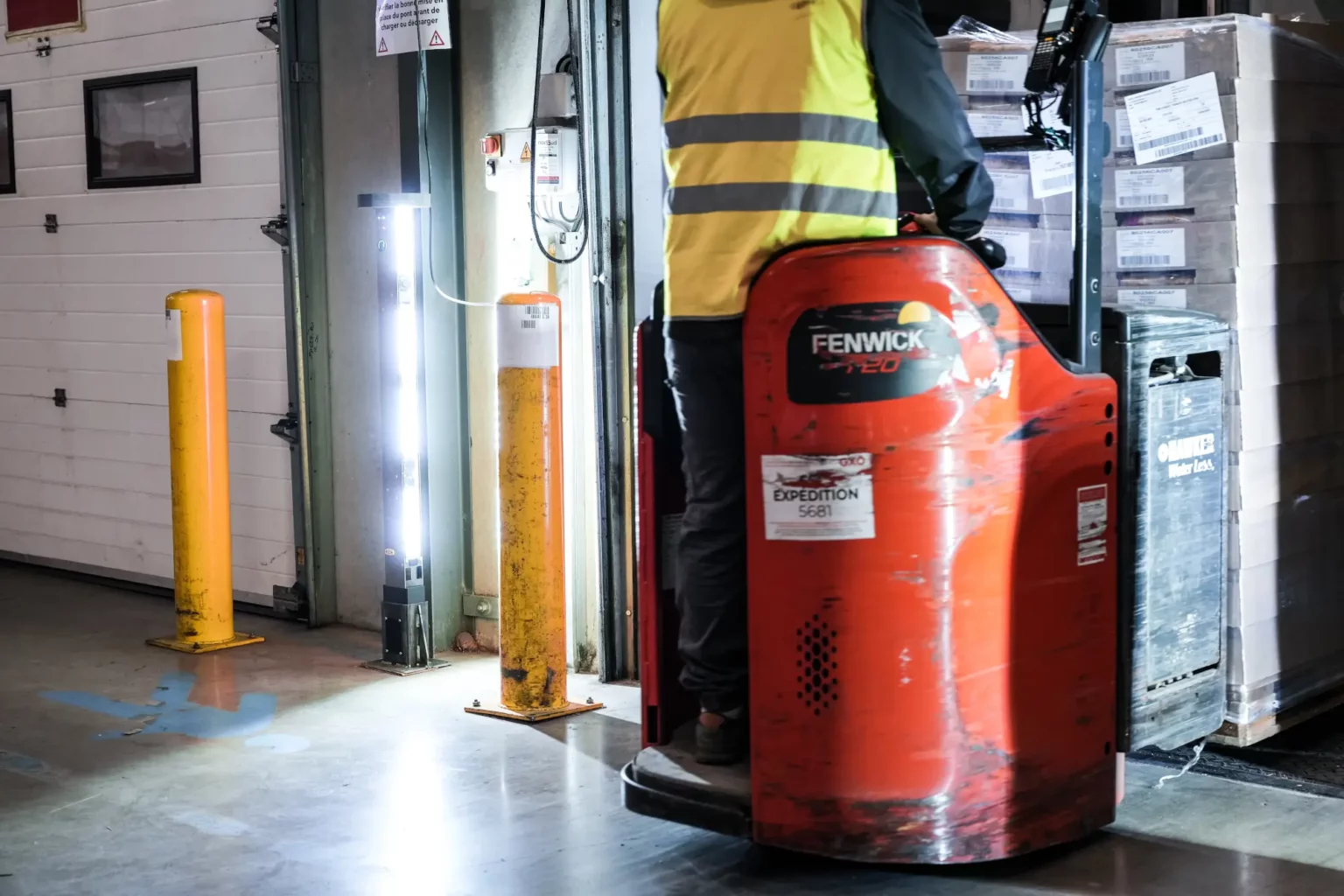
In many modern warehouses, the sight of Automated Guided Vehicles (AGVs) moving silently between aisles is a sign of progress. They represent the first wave of true warehouse automation — replacing manual forklift activities with programmed, repeatable movements.
On paper, they are the perfect workers. They don’t take breaks, they follow strict paths, and they enable 24/7 operations.
But when you look closely at the daily reality of AGV operations, a hidden inefficiency emerges. It isn't that the machines fail; it's that they are "blind".
Despite being "automated", traditional AGVs still rely heavily on human intervention for basic tasks. And in a high-volume logistics environment, that reliance is a bottleneck.
The Friction of "Blind" Automation
The fundamental flaw of traditional AGVs is their lack of vision. They are programmed to follow a digital map, but they cannot truly perceive their physical surroundings in real-time. This lack of perception leads to several operational friction points:
- Human Dependency for Pallet Location: Often, a human operator must still tell the system exactly where a pallet is located and what type it is (EUR, industrial, etc.) before an AGV can interact with it.
- The Angle Detection Failure: One of the most common causes of AGV "downtime" is a misalignment of the load. If a pallet is placed at a slight angle, a standard AGV cannot adjust its approach. It simply fails to pick, requiring a manual reset or a human to straighten the pallet.
- The Unstacking Bottleneck: Without visual intelligence, unstacking pallets is either painfully slow or impossible because the AGV cannot "see" the stack height or position.
- Manual Scanning Steps: If a barcode is not perfectly placed or if the SSCC position varies, the AGV often requires a human to perform a manual scan to confirm the data.
- Safety Stops vs. Intelligent Avoidance: Standard LiDAR sensors are excellent for safety, but they are binary. If an obstacle is detected, the AGV stops and waits for a human to clear the path. It cannot "see" a way around the problem.
When an AGV waits for human help, the "automation" has failed. You are no longer saving labor; you are simply managing a more expensive, less flexible forklift.
From Following a Script to Understanding the Mission
High-performance warehouses are shifting their focus from simple "guided" vehicles to systems capable of Active Environmental Perception.
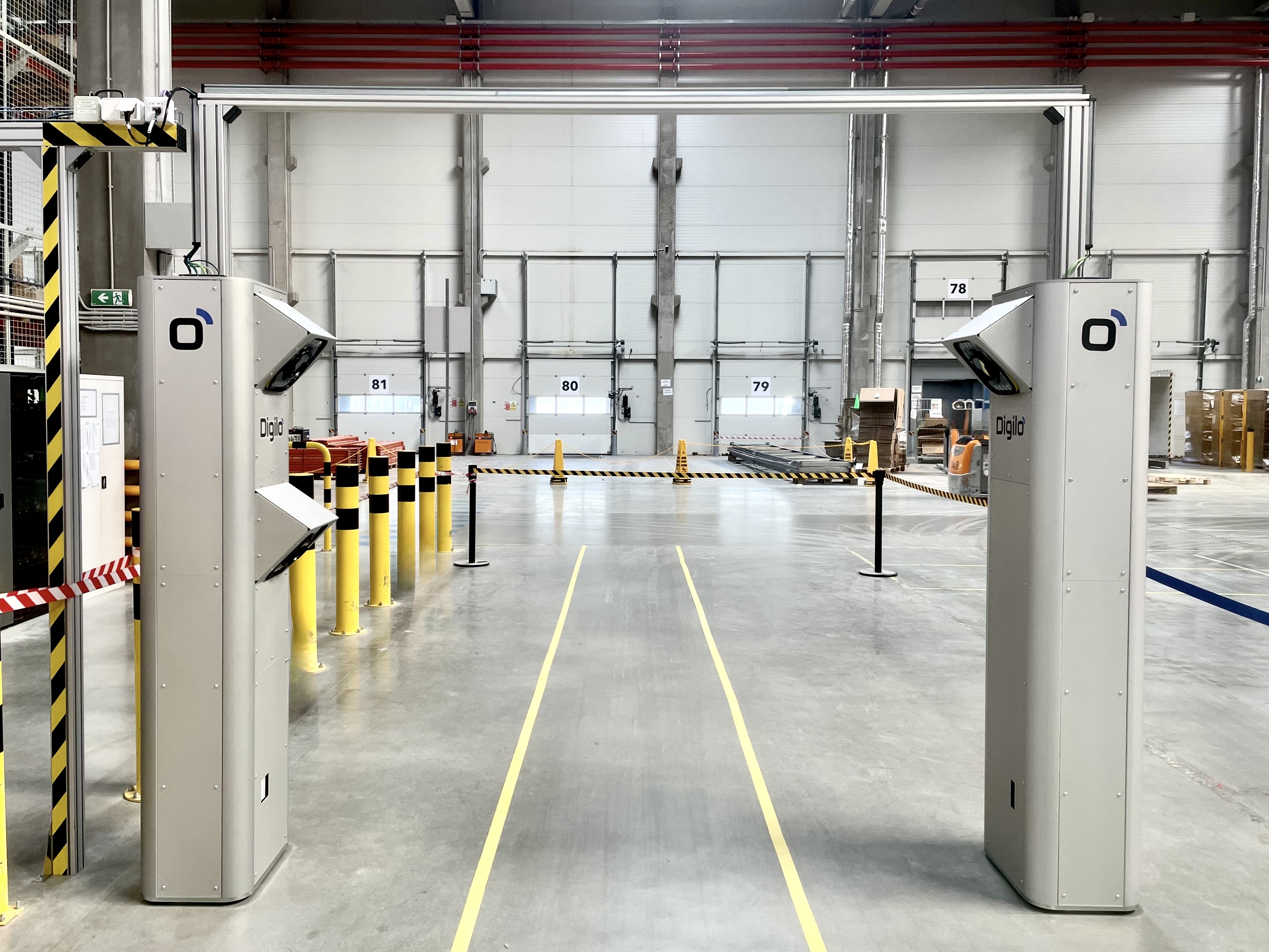
By equipping AGVs with "eyes" – industrial stereo cameras and AI-powered "brains" – the machine transitions from a rigid robot into an intelligent partner. When an AGV gains visual intelligence, the workflow transforms:
- Automatic Pallet Detection: The vehicle identifies the pallet type and location independently. No human action is needed to start the mission.
- Fast Unstacking: Cameras installed directly on the AGV allow it to instantly recognize if a pallet is stacked and calculate the exact height required to position its forks.
- Automated Data Capture: High-speed cameras handle barcode decoding on the fly, eliminating the "scan-to-confirm" interruptions that plague traditional workflows.
Is Your Automation Truly Working, or Just Moving?
AGVs have already proven they can move goods. But in modern logistics, movement alone is no longer enough. The goal is a digital flow that mirrors the physical flow in real-time, without human "babysitting".
If your AGVs require human intervention to find pallets, scan barcodes, or resolve minor path obstacles, your throughput is limited by human interaction speed – not your system’s potential.
The question is no longer whether AGVs work. The question is: Is your warehouse gaining a competitive edge, or are you just subsidizing the downtime of "blind" machines?
.png)