.jpeg)

Interview multiple candidates
Lorem ipsum dolor sit amet, consectetur adipiscing elit proin mi pellentesque lorem turpis feugiat non sed sed sed aliquam lectus sodales gravida turpis maassa odio faucibus accumsan turpis nulla tellus purus ut cursus lorem in pellentesque risus turpis eget quam eu nunc sed diam.
Search for the right experience
Lorem ipsum dolor sit amet, consectetur adipiscing elit proin mi pellentesque lorem turpis feugiat non sed sed sed aliquam lectus sodales gravida turpis maassa odio.
- Lorem ipsum dolor sit amet, consectetur adipiscing elit.
- Porttitor nibh est vulputate vitae sem vitae.
- Netus vestibulum dignissim scelerisque vitae.
- Amet tellus nisl risus lorem vulputate velit eget.
Ask for past work examples & results
Lorem ipsum dolor sit amet, consectetur adipiscing elit consectetur in proin mattis enim posuere maecenas non magna mauris, feugiat montes, porttitor eget nulla id id.
- Lorem ipsum dolor sit amet, consectetur adipiscing elit.
- Netus vestibulum dignissim scelerisque vitae.
- Porttitor nibh est vulputate vitae sem vitae.
- Amet tellus nisl risus lorem vulputate velit eget.
Vet candidates & ask for past references before hiring
Lorem ipsum dolor sit amet, consectetur adipiscing elit ut suspendisse convallis enim tincidunt nunc condimentum facilisi accumsan tempor donec dolor malesuada vestibulum in sed sed morbi accumsan tristique turpis vivamus non velit euismod.
“Lorem ipsum dolor sit amet, consectetur adipiscing elit nunc gravida purus urna, ipsum eu morbi in enim”
Once you hire them, give them access for all tools & resources for success
Lorem ipsum dolor sit amet, consectetur adipiscing elit ut suspendisse convallis enim tincidunt nunc condimentum facilisi accumsan tempor donec dolor malesuada vestibulum in sed sed morbi accumsan tristique turpis vivamus non velit euismod.
In the high-pressure environment of a busy shipping dock, the loading process is often seen as a race against the clock. Pallets must move from staging to the trailer as quickly as possible to meet departure windows.
To manage this, most warehouses rely on a "scan-to-confirm" workflow. The driver scans the pallet, then scans a barcode at the dock gate to tell the Warehouse Management System (WMS) that the item is being loaded into the correct trailer.
On paper, this is a secure process. In practice, it is a significant bottleneck that creates more friction than it solves.
The Hidden Friction of Manual Gates
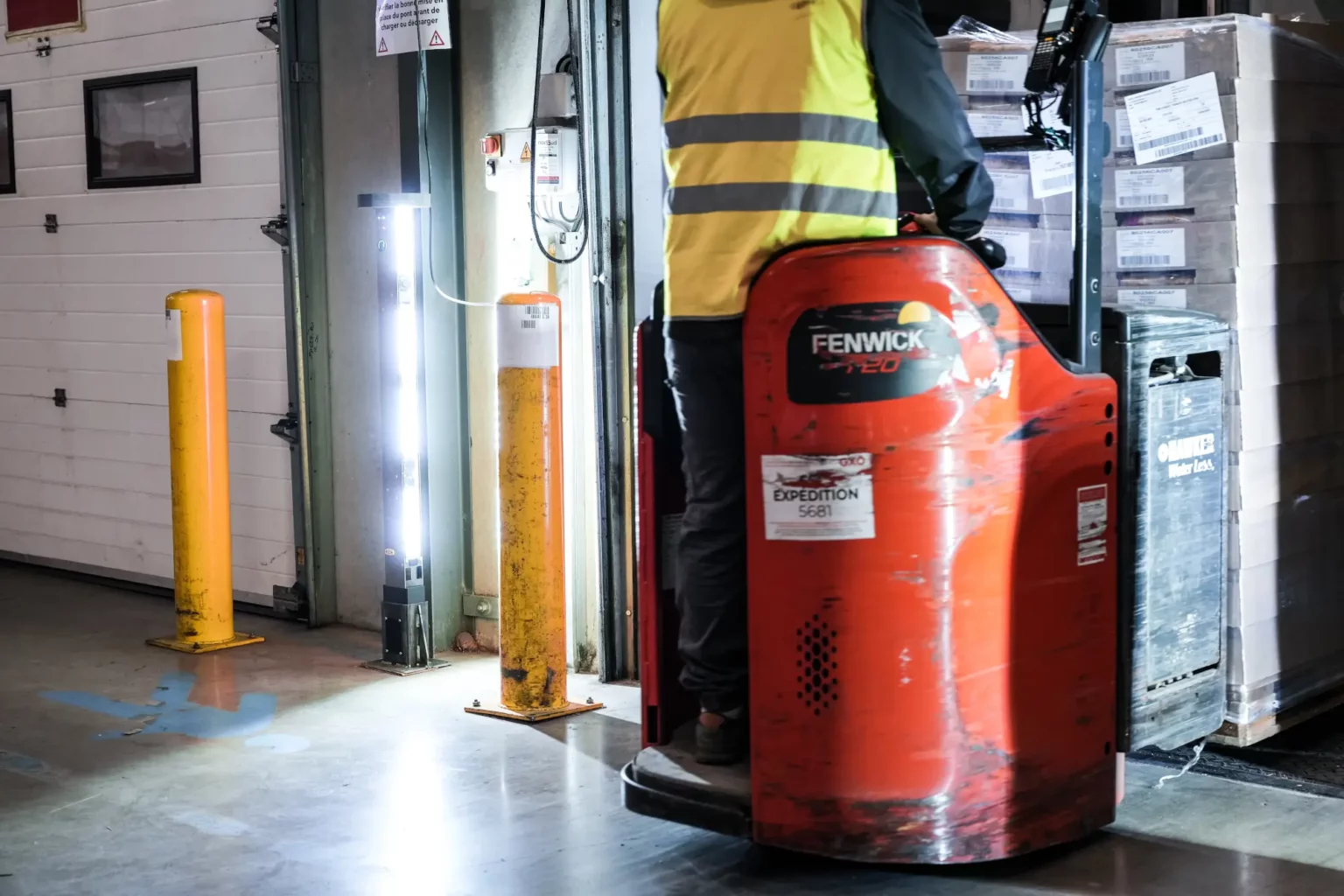
Traditional loading processes create a constant "start-stop" rhythm. Every time a forklift driver reaches a dock gate, they must perform a series of manual actions: slow down, aim a scanner, wait for a beep, and verify the screen.
While a single scan only takes a few seconds, the cumulative impact is massive. In a high-volume facility where hundreds of pallets are loaded per shift, these "micro-interruptions" can swallow up to 25 minutes of productive time per operator, per day.
But the cost isn't just measured in seconds; it’s measured in reliability. Industry data shows that manual data entry and repetitive manual scanning are prone to human error – approximately one error per 300 actions in manual environments. In the context of loading, this means pallets are "digitally" scanned into a truck but "physically" left on the dock, or worse, loaded into the wrong trailer entirely.
Why "Scan-to-Confirm" is No Longer Enough
The core problem is that manual scanning creates a gap between the digital flow (what the system thinks is happening) and the physical flow (what is actually happening).
When a driver scans a gate barcode, they are giving an input to the system. But that input can be faked or performed in error. A driver might scan Gate 5 but accidentally drive into Gate 6. The system records a successful load, but the physical reality is a mis-shipment.
To improve loading confirmation, warehouses must stop asking operators to be "data entry clerks" and start letting them be "movers."
The Move Toward Autonomous Verification
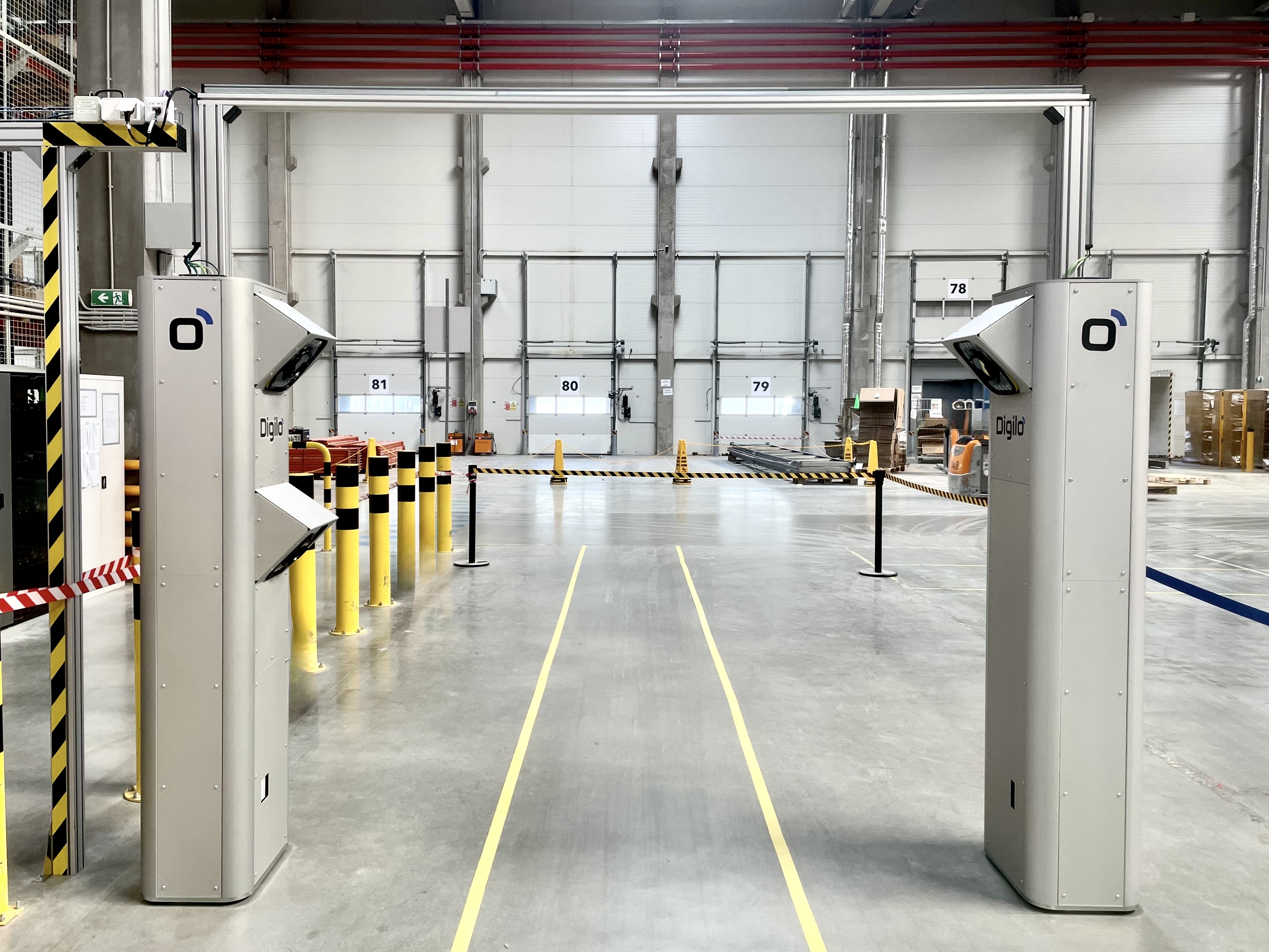
High-performance warehouses are moving away from manual confirmation and toward Autonomous Verification. The goal is to synchronize the digital and physical flows in real-time without requiring the driver to stop.
This shift involves three key pillars:
- Passive Data Capture: Using technology that identifies the pallet and the gate location automatically as the forklift passes through. This removes the need for the "gate scan" entirely, allowing the driver to maintain a continuous speed.
- Contextual Validation: The system should only validate a load when the physical conditions are met – for example, confirming that the specific pallet on the forks has actually entered the specific trailer assigned by the WMS.
- Visual Traceability: Instead of relying on a "green checkmark" on a screen, modern operations are using automated image capture to document every load. This provides an objective "source of truth" that proves exactly what was loaded, where, and in what condition.
The New Standard for Loading Accuracy
The "scan-to-confirm" era was defined by a compromise: we accepted lower throughput in exchange for better data. But in a modern logistics landscape where every minute of dock time is scrutinized, that compromise is no longer necessary.
Improving loading confirmation isn't about finding a faster way to scan a barcode; it’s about removing the need for the scan entirely. By aligning your digital records with the physical movement of goods through autonomous verification, you don’t just speed up the dock – you eliminate the gap where human error lives.
The most efficient loading process isn't the one with the most checkpoints. It’s the one where the movement itself is the confirmation.
.png)