Interview multiple candidates
Lorem ipsum dolor sit amet, consectetur adipiscing elit proin mi pellentesque lorem turpis feugiat non sed sed sed aliquam lectus sodales gravida turpis maassa odio faucibus accumsan turpis nulla tellus purus ut cursus lorem in pellentesque risus turpis eget quam eu nunc sed diam.
Search for the right experience
Lorem ipsum dolor sit amet, consectetur adipiscing elit proin mi pellentesque lorem turpis feugiat non sed sed sed aliquam lectus sodales gravida turpis maassa odio.
- Lorem ipsum dolor sit amet, consectetur adipiscing elit.
- Porttitor nibh est vulputate vitae sem vitae.
- Netus vestibulum dignissim scelerisque vitae.
- Amet tellus nisl risus lorem vulputate velit eget.
Ask for past work examples & results
Lorem ipsum dolor sit amet, consectetur adipiscing elit consectetur in proin mattis enim posuere maecenas non magna mauris, feugiat montes, porttitor eget nulla id id.
- Lorem ipsum dolor sit amet, consectetur adipiscing elit.
- Netus vestibulum dignissim scelerisque vitae.
- Porttitor nibh est vulputate vitae sem vitae.
- Amet tellus nisl risus lorem vulputate velit eget.
Vet candidates & ask for past references before hiring
Lorem ipsum dolor sit amet, consectetur adipiscing elit ut suspendisse convallis enim tincidunt nunc condimentum facilisi accumsan tempor donec dolor malesuada vestibulum in sed sed morbi accumsan tristique turpis vivamus non velit euismod.
“Lorem ipsum dolor sit amet, consectetur adipiscing elit nunc gravida purus urna, ipsum eu morbi in enim”
Once you hire them, give them access for all tools & resources for success
Lorem ipsum dolor sit amet, consectetur adipiscing elit ut suspendisse convallis enim tincidunt nunc condimentum facilisi accumsan tempor donec dolor malesuada vestibulum in sed sed morbi accumsan tristique turpis vivamus non velit euismod.
In the pursuit of a perfect shipping record, most warehouses rely on a safety net: the double-check. It feels like the ultimate insurance policy. If one person picks the item and another person verifies it, the error should, in theory, disappear.
But this "Quality Wall" is one of the most expensive illusions in logistics.
The problem isn't just the extra labor; it’s the fundamental philosophy of detecting mistakes rather than preventing them. When you focus on control, you are essentially planning for failure.
The Hidden Costs of Detection-Based Quality
When a warehouse relies on secondary checks — whether through a manual packing station or a "scan-to-verify" step — it creates three specific operational drains:
- The "Check-Wait" Bottleneck: In a control-heavy environment, the speed of your entire warehouse is limited by the speed of the checker. If picking is fast but the verification station is backed up, your throughput stalls. You aren't moving faster; you’re just waiting more accurately.
- The High Cost of Rework: Detecting a mistake at the end of the line is a victory, but it’s a costly one. The item must be returned to the shelf, the correct item refetched, and the paperwork updated. Research shows that "fixing" an error costs significantly more than the original pick itself.
- The Psychological Safety Net: Ironically, when workers know there is a secondary check, their individual focus often drops. Subconsciously, the primary picker thinks, "If I miss something, the packing station will catch it." This shifts the responsibility away from the source of the action.
Shifting the Paradigm: Prevention at the Source
True operational excellence happens when the process is designed so that a mistake physically cannot occur. This is the shift from "Control" (checking after the fact) to "Prevention" (validating during the act).
Imagine a workflow where the "check" isn't a separate step, but a seamless part of the physical movement.
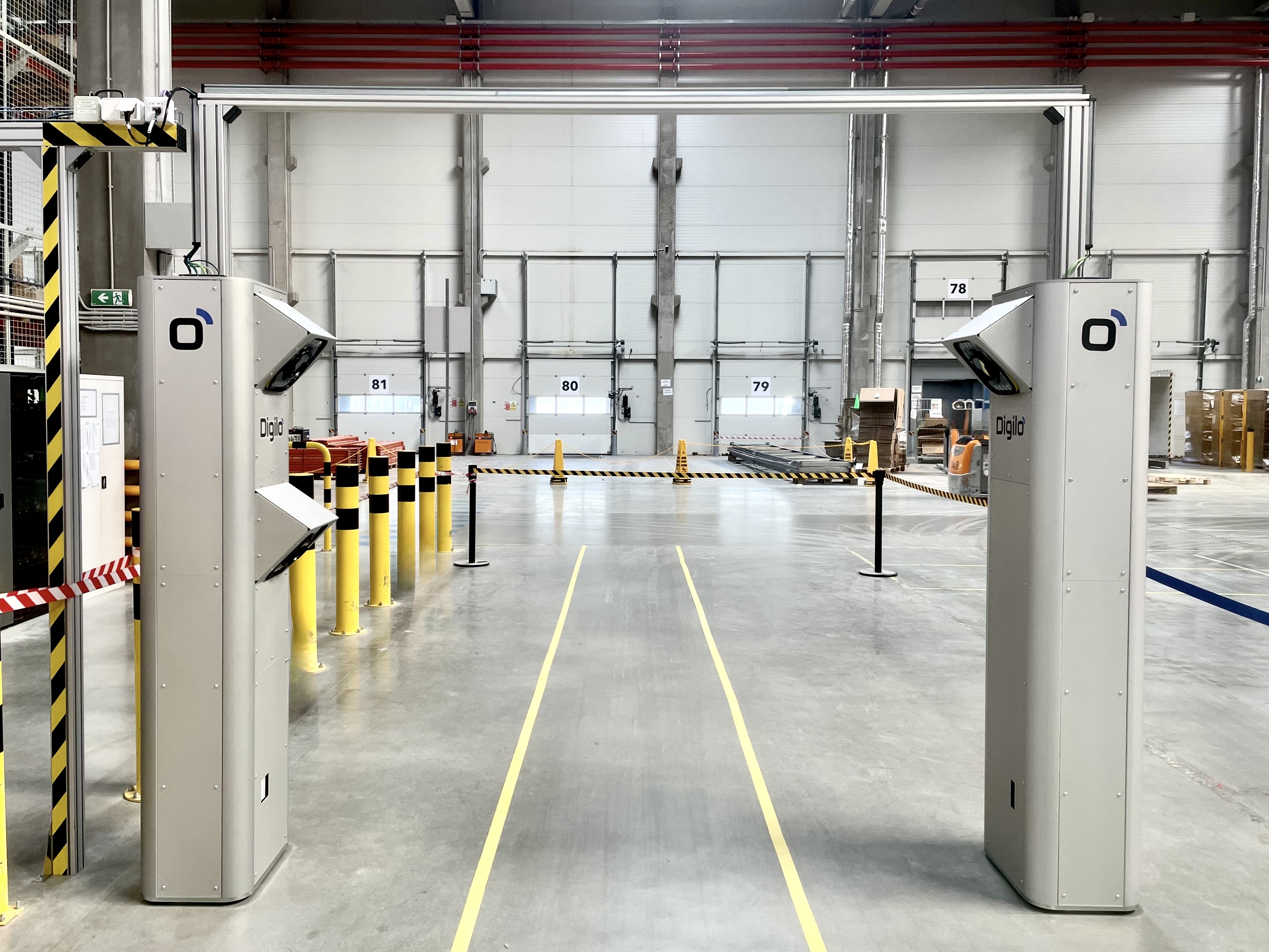
- Dimensional Validation: Instead of a human looking at a box and guessing if it's the right size or quantity, the system should instantly "know" the volume of the goods being handled. If the dimensions don't match the order's digital footprint, the process pauses before the item ever leaves the picker's hand.
- Instant Quantity Verification: Rather than counting items manually — a task humans are notoriously bad at during long shifts — the environment should perceive the count automatically. Whether by weight or advanced visual recognition, the "counting" happens in the background, in real-time.
- Digital Flow = Physical Flow: Prevention means that the digital system and the physical world are locked in sync. If a worker reaches for the wrong bin or tries to pack an extra item, the system corrects them in the moment.
The Goal: A "Frictionless" Zero-Error Rate
The most efficient warehouses in the world don't have the best "checkers" — they have the best processes. They have realized that every time a worker has to stop to scan, count, or verify, the warehouse is losing money.
By investing in technologies that perceive dimensions and counts automatically, you remove the human element of error without adding the human cost of verification.
In the end, the question for warehouse leaders is simple: Do you want to spend your budget on people who find mistakes, or on a system that ensures they never happen in the first place?
.png)